Customer
SHANGHAI TRURON TESTING TECHNOLOGY CO., LTD.

Industry: Testing & Laboratory Services
Application: Battery Product Horizontal Shock Testing / Mechanical Reliability Testing
Equipment: CME KRD12-2000S Pneumatic Horizontal Shock Test System
Project Background
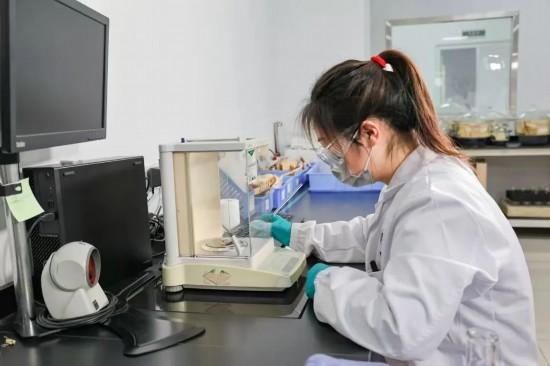
With the development of electric vehicles, energy storage systems, and portable electronic devices, batteries are being used in an increasingly wide range of applications. During transportation, handling, and service, batteries may be exposed to mechanical shock. Evaluating their mechanical resistance and structural reliability is therefore an important part of battery product safety and reliability verification.
For third-party testing laboratories, battery-related testing requires equipment capable of providing controlled shock conditions, adjustable test parameters, repeatable test execution, and reliable data acquisition to support different products and test requirements.
To support horizontal shock testing applications, SHANGHAI TRURON TESTING TECHNOLOGY CO., LTD. introduced the CME KRD12-2000S Pneumatic Horizontal Shock Test System, providing equipment support for battery-product-related horizontal shock testing and mechanical reliability verification.
Customer Challenges
Mechanical shock verification of batteries and related components requires a test system that can accommodate different specified shock conditions while maintaining effective control over the test process.
The key equipment requirements included:
Horizontal shock testing capability: Supporting mechanical resistance testing under horizontal shock conditions.
Multiple shock conditions: Accommodating different target acceleration levels and pulse durations.
Controlled test execution: Allowing shock parameters to be adjusted for different test conditions.
Repeatability and data recording: Supporting repeated tests and recording measured acceleration, pulse duration, and velocity change.
Test data analysis: Providing a data basis for laboratory mechanical shock and reliability verification.
CME Solution
Based on the customer's horizontal shock testing requirements, CME supplied the KRD12-2000S Pneumatic Horizontal Shock Test System to provide a dedicated test platform for mechanical shock testing of battery products and related components.
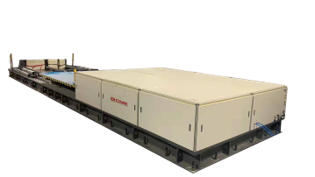
The KRD12 series uses pneumatic drive technology, with shock velocity controlled through air pressure adjustment. A computer-based control and measurement system manages the test process and acquires test data.
Different shock conditions can be achieved by adjusting test parameters and cushioning configurations. The KRD12 series supports multiple shock waveforms, including half-sine, post-peak sawtooth, and trapezoidal waveforms. The system also integrates shock control, measurement, and test report generation.
These capabilities can support horizontal shock testing applications related to battery products. Specific test parameters, waveforms, and acceptance criteria should be determined according to the product under test, applicable standards, and the customer's test procedure.
Key Advantages of the CME KRD12-2000S
01 | Pneumatic Horizontal Shock Generation
The system uses pneumatic drive technology to generate horizontal shock. Shock velocity can be adjusted through air pressure, providing adjustable shock conditions for testing battery products and related components.
02 | Multiple Shock Waveforms
The KRD12 series supports half-sine, post-peak sawtooth, and trapezoidal shock waveforms, helping accommodate the requirements of different products and test procedures.
03 | Adjustable Shock Parameters
By adjusting air pressure, test parameters, and cushioning configurations, the system can accommodate different shock test conditions and support laboratory testing across multiple specified conditions.
04 | Integrated Control and Measurement
The system integrates computer-based control and measurement functions to acquire and analyze shock test data. Test report generation also helps laboratories organize and trace test results.
05 | Repeatable Testing and Reliability Verification
The system supports repeated shock testing and records parameters such as measured acceleration, pulse duration, and velocity change, providing data support for mechanical shock verification related to battery products.
Project Test Verification
As part of the equipment testing, TRURON conducted multiple horizontal half-sine shock tests under different conditions.
The test report recorded three shock profiles:
Shock test (60g@45ms)
Half sine | No. | Nominal value | Waveform generator | Air pressure | Measured value |
| A(g) | D(ms) | V(m/s) | Material | Qty | kpa | A(g) | D(ms) | ΔV(m/s) |
1 | 60 | 45 |
| Spongy cushion | 19 | 330 | 61.4723 | 47.0729 | 12.0481 |
2 | 60 | 45 |
| Spongy cushion | 19 | 330 | 62.0699 | 43.4271 | 11.8972 |
3 | 60 | 45 |
| Spongy cushion | 19 | 330 | 63.8726 | 46.2344 | 12.1852 |
4 | 60 | 45 |
| Spongy cushion | 19 | 330 | 60.7382 | 44.7188 | 11.915 |
5 | 60 | 45 |
| Spongy cushion | 19 | 330 | 62.6844 | 46.3698 | 12.216 |
Shock test (90g@20ms)
Half sine | No. | Nominal value | Waveform generator | Air pressure | Measured value |
| A(g) | D(ms) | V(m/s) | Material | Qty | kpa | A(g) | D(ms) | ΔV(m/s) |
1 | 90 | 20 |
| Sponge pad | 4 | 250 | 90.0699 | 21.1563 | 9.32304 |
2 | 90 | 20 |
| Sponge pad | 4 | 250 | 93.9848 | 21.2552 | 9.68769 |
3 | 90 | 20 |
| Sponge pad | 4 | 250 | 93.8911 | 20.4375 | 9.53587 |
4 | 90 | 20 |
| Sponge pad | 4 | 250 | 92.6861 | 20.3229 | 9.56369 |
5 | 90 | 20 |
| Sponge pad | 4 | 250 | 95.9212 | 21.0104 | 9.647 |
Shock test (150g@15ms)
Half sine | No. | Nominal value | Waveform generator | Air pressure | Measured value |
| A(g) | D(ms) | V(m/s) | Material | Qty | kpa | A(g) | D(ms) | ΔV(m/s) |
1 | 150 | 15 |
| Sponge pad | 3 | 310 | 144.287 | 15.0313 | 10.666 |
2 | 150 | 15 |
| Sponge pad | 3 | 310 | 157.347 | 15 | 10.7388 |
3 | 150 | 15 |
| Sponge pad | 3 | 310 | 156.518 | 16.4219 | 11.1443 |
4 | 150 | 15 |
| Sponge pad | 3 | 310 | 157.487 | 15.0469 | 10.5733 |
5 | 150 | 15 |
| Sponge pad | 3 | 310 | 147.253 | 14.0625 | 10.2515 |
Each condition was tested five times, with measured acceleration, pulse duration, and velocity-change data recorded for each test.
For the 150 g @ 15 ms condition, the five measured peak acceleration values ranged from 144.287 to 157.487 g, providing test evidence for operation under a high-acceleration horizontal shock condition.
Project Results
With the introduction of the CME KRD12-2000S, SHANGHAI TRURON TESTING TECHNOLOGY gained access to pneumatic horizontal shock testing capabilities that can support battery-product-related mechanical shock testing and reliability verification.
The system provides several practical benefits:
Establishes an equipment basis for horizontal shock testing of battery products and related components.
Supports testing under multiple specified shock conditions.
Provides measurement records for test result analysis through repeated testing and data acquisition.
Supports laboratory testing workflows through integrated control and measurement functions.
Provides equipment support for future battery-related mechanical shock testing projects.
Project Summary
Mechanical reliability verification of battery products requires test equipment suited to the intended test conditions. The CME KRD12-2000S Pneumatic Horizontal Shock Test System combines pneumatic drive, adjustable shock parameters, multiple shock waveforms, and integrated measurement to support SHANGHAI TRURON TESTING TECHNOLOGY in battery-product-related horizontal shock testing.
CME continues to provide professional test equipment solutions for mechanical shock testing and reliability verification across battery and other product applications.
Video