-
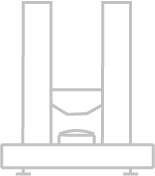
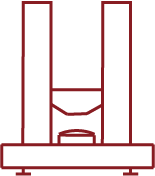
KRD10 series is a fully automatic hydraulic lifting vertical shock test system. It is vertical shock test equipment with novel design, high degree of automation, simple operation and convenient maintenance. It is used to measure and determine the impact resistance of products or packaging, and assess the functional reliability and structural integrity of the test product in a shock environment. The KRD10 series hydraulic shock test system can perform various conventional classic shock tests to realize the shock wave and shock energy that the product is subjected to in the actual environment, thereby improving the system or optimizing the structure of the product. This equipment meets the requirements of MIL-STD-202, MIL-STD-750, MIL-STD-810, MIL-STD-883, IEC68-2-27 and other standards.
-
KRD11 series pneumatic vertical shock test system is featured with advanced design, high degree of automation and reliability, simple operation and convenient maintenance. The system meets the requirements of both shock and bump test, can perform conventional half-sine wave, post-peak sawtooth wave, trapezoid wave and other waveform shock tests.
-
The KRD12 series shock test system is used to measure and determine the horizontal impact resistance of a product or package, and to evaluate the reliability and structural integrity of the test unit in a horizontal impact environment. The system can perform conventional half-sine wave, post-peak sawtooth wave, or trapezoid wave shock test to realize the shock energy that the product is subjected to in the actual environment, thereby improving the product or packaging structure.
-
KRD13 series high energy shock test system is specially designed to meet the requirements of military and automotive testing. The system adopts the principle of pneumatic energy storage expansion. By adjusting the inflation pressure, various high-level acceleration tests can be easily implemented in a short stroke.
For the high-G classic shock test, it’s equipped with the corresponding shock amplifier to complete high-peak shock test.
-
High impact shock test system meets MIL-S-901D standard which covers shock testing requirements for ship board machinery, equipment, systems, and structures, excluding submarine pressure hull penetrations. The purpose of these requirements is to verify the ability of shipboard installations to withstand shock loadings which may be incurred during wartime service due to the effects of nuclear or conventional weapons.
-
KRD17 series pneumatic bidirectional vertical shock test system is the novel designed and developed for large specimens that cannot or are not easy to turn over, especially adopt for battery testing. It can complete vertical upward and downward shock test in one test stand without moving the UUT.
-
The KRD20 pneumatic bump test machine is a fully automatic pneumatic lift vertical bump test system, designed to replace traditional mechanical cam-type test benches. Featuring a novel structure, high automation, easy operation and low maintenance, it simulates repeated impact loads that products may encounter during transportation, handling and operation, to evaluate their functional reliability and structural integrity under bump environments. Widely applied in industries such as aerospace, automotive electronics, telecommunications and packaging manufacturing, this equipment performs various standard bump tests to replicate real-world shock profiles and impact energy, supporting product structure optimization and reliability verification. It complies with international test standards including IEC 60068-2-29:1987 and IEC 60068-2-27:2008.
-

The KRD13-HC High-Acceleration Sensor Calibration System is a vertical impact calibration system featuring an innovative design, a high degree of automation, simple operation, and easy maintenance. It is characterized by its compact size, light weight, adjustable pulse duration, rational structural design, and high reliability.
The system can be used to perform various conventional classical impact tests for measuring and determining the impact resistance of products. It can also serve as a standard source for the calibration, impact testing, and measurement of vibration and shock sensors. The system is suitable for high-range impact calibration, verification, and testing of vibration sensors and shock sensors.
Applicable Standards
• IEC 60068-2-27:2008 — Environmental testing — Part 2-27: Tests – Test Ea and guidance: Shock
• MIL-STD-810, Method 516 — Environmental Engineering Considerations and Laboratory Tests— Shock
• JJG 541-88 — Verification Regulation for Drop Impact Testing Machines
• JJF 2076-2016 — Verification System for Measuring Instruments for Shock Accelerometers — Requirements for Shock Standards Using the Acceleration Comparison Method
• JJF 1537-2015 — Calibration Specification for Dynamic Characteristics of Gyroscopes — Requirements for Shock Testing Machines