Equipment Model: KRD31-2000 Constant Acceleration Tester (Arm Type)
End User: Aerospace Reliability Technology Co., Ltd. Zhengzhou Branch
Industry: Aerospace / Equipment Reliability Testing
Application: Constant Acceleration Testing / Structural Integrity Verification / Environmental Reliability Evaluation
Equipment: KRD31-2000 Constant Acceleration Tester (Arm Type)
01 | End User & Industry Background
Aerospace equipment, onboard electronics, and precision components may be exposed to sustained or direction-specific acceleration loads during transportation, flight, and mission operation. These loads can affect internal structures, mechanical connections, mounting components, and electronic devices.
For organizations engaged in aerospace testing and reliability verification, establishing reliable and controllable constant acceleration testing capabilities is an important part of evaluating product structural integrity and operational reliability.
Aerospace Reliability Technology Co., Ltd. Zhengzhou Branch required a dedicated constant acceleration testing solution for aerospace-related reliability testing applications. To accommodate large and heavy test specimens, the laboratory needed a system with sufficient load capacity, adjustable acceleration levels, reliable test control, and comprehensive safety protection.
02 | Testing Challenges
Constant acceleration testing of aerospace equipment and related electronic products requires careful consideration of specimen weight, mounting space, acceleration control, and operational safety.
The key testing requirements included:
High Load Capacity: Accommodating large and heavy specimens during constant acceleration testing.
Adjustable Acceleration Range: Setting the required acceleration levels according to different test specifications.
Large Specimen Accommodation: Providing sufficient mounting space for specimens of different dimensions.
Controlled Test Execution: Enabling acceleration setting, rotating-arm operation control, and real-time monitoring of test data.
Multi-Channel Signal Transmission: Maintaining power and communication connections between the rotating specimen and the control system.
Operational Safety: Monitoring system status and providing necessary interlocks and safety protection functions.
03 | CME Solution
To address the customer's constant acceleration testing requirements, CME provided the KRD31-2000 Constant Acceleration Tester (Arm Type) as a dedicated testing platform for aerospace equipment and related electronic products.
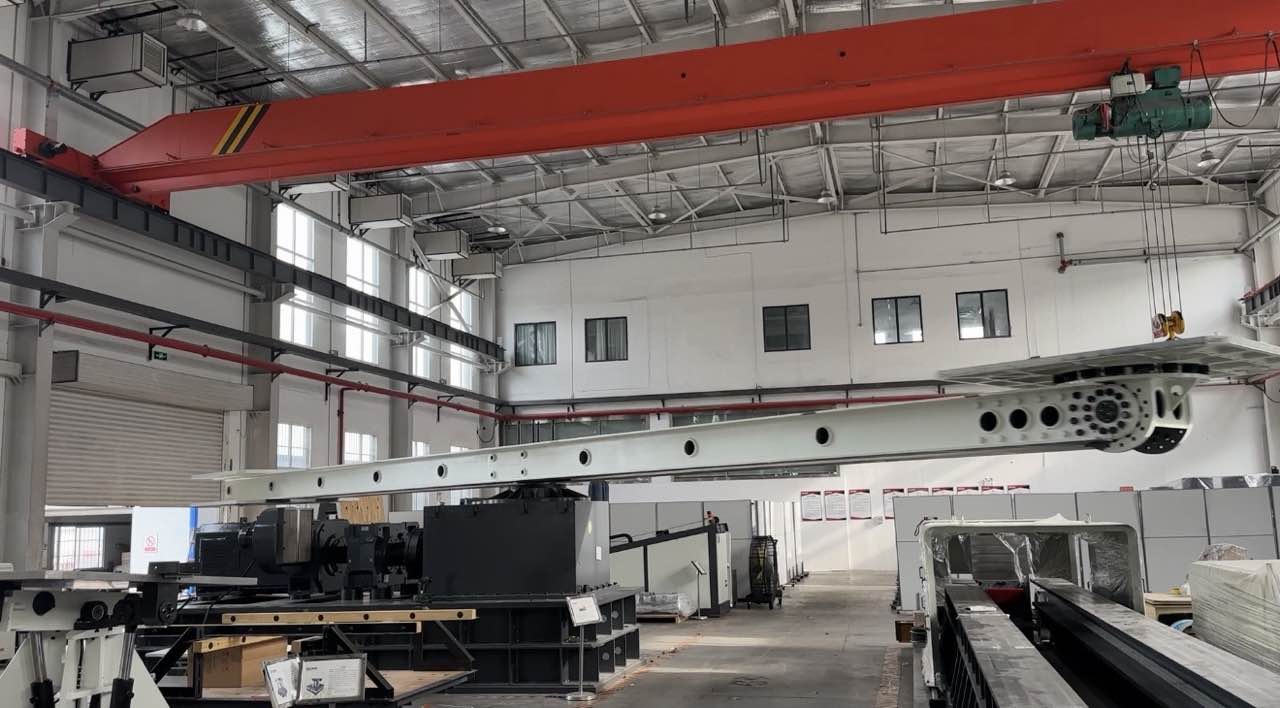
The system adopts a rotating-arm configuration. Its drive system rotates the working arm around a central spindle at a controlled speed. Test specimens are mounted at a specified radius on the arm and are subjected to the corresponding centrifugal constant acceleration during rotation.
Different acceleration conditions can be achieved by adjusting the rotational speed and specimen mounting radius. The computer-based control system allows users to set acceleration, mounting radius, test duration, and tolerance limits, while displaying test data and curves in real time.
To maintain power and signal connections during rotation, the system is equipped with a rotary transfer assembly and slip-ring components. These support multiple power, control-signal, and communication connections. A safety monitoring and interlock system is also incorporated to protect the testing process.
04 | Key Technical Specifications
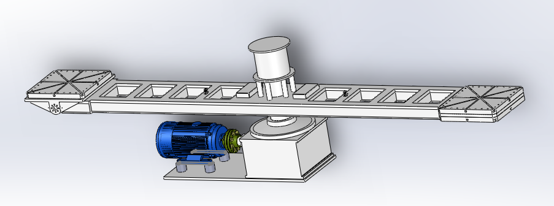
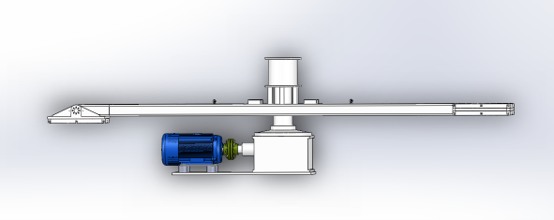
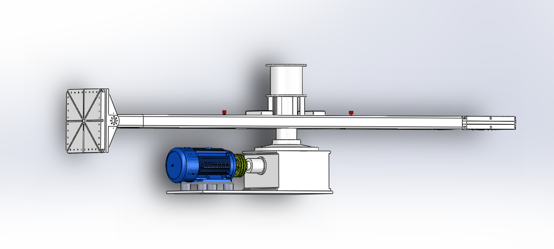
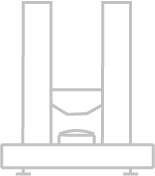
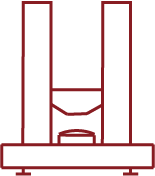
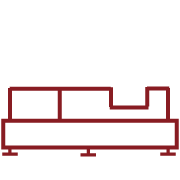
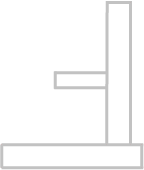
3D Schematic Diagram of the Centrifuge
Signal and Media Transfer Configuration
Electrical slip rings: 8 channels of 380 V/100 A three-phase AC; 100 channels of 220 V/5 A AC; 2 channels of 270 V DC.
Communication interfaces: 8 Ethernet channels, 4 CAN bus channels, and 8 MIL-STD-1553B communication channels.
Oil and gas transfer: 2 hydraulic oil circuits with a maximum pressure of 25 MPa; 2 inert gas circuits with a maximum pressure of 15 MPa.
Designed slip-ring service life: More than 6 million revolutions.
05 | Key Technical Advantages
01 | High-Capacity Constant Acceleration Testing
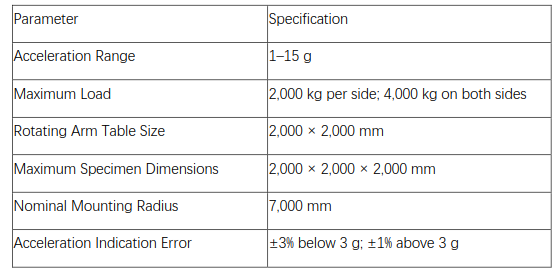
With a maximum load of 2,000 kg per side and 4,000 kg on both sides, the system accommodates large and heavy test specimens.
02 | Large Rotating Arm and Flexible Mounting
The system features a 2,000 × 2,000 mm rotating-arm mounting table and supports specimens up to 2,000 × 2,000 × 2,000 mm. The mounting table can be rotated 180° along the arm direction, facilitating different specimen mounting configurations.
03 | Precise Acceleration Control
The rotational speed and specimen mounting radius are controlled to achieve the required constant acceleration conditions. The acceleration indication error is ±3% below 3 g and ±1% above 3 g.
04 | Multi-Channel Signal and Communication Transfer
The slip-ring assembly enables power, signal, and communication transmission during rotation. Supported interfaces include Ethernet, CAN bus, and MIL-STD-1553B, helping maintain connections with the specimen throughout testing.
05 | Automatic Control and Safety Protection
The system supports both computer-based automatic and manual control, with real-time test data and curve display. Safety functions include overspeed, overcurrent, overvoltage, phase-loss, emergency-stop, and safety-door interlock protection.
06 | Applicable Standards
The system is designed to meet the requirements of the following test standards and verification regulations:
GJB 150.15A-2009 — Acceleration Test
GB/T 2423.15-2008 — Test Ga: Steady-State Acceleration
GJB 360B-2009 — Method 212: Acceleration Test
JJG 972-2023 — Verification Regulation for Centrifugal Constant Acceleration Testing Machines (Class 5)
Specific test procedures and acceptance criteria should be determined according to the applicable product standards and the customer's test requirements.
07 | Project Value
With the KRD31-2000 Constant Acceleration Tester (Arm Type), the customer gained a dedicated testing platform for constant acceleration testing of aerospace equipment and related electronic products.
Combining a high-capacity rotating-arm structure, adjustable acceleration control, multi-channel signal transmission, and comprehensive safety protection, the system provides equipment support for constant acceleration testing of specimens with different sizes and weights.
Video