DATE: 2026-04-08
VIEW COUNT: 1226
UN38.3 Battery Shock Test
With the rapid development of electric vehicles, energy storage systems, and portable devices, the safety of lithium-ion battery packs during transport and use has become increasingly important. According to the UN38.3 standard, lithium-ion cells and batteries must undergo rigorous testing before transport. Among these, the shock test is a critical step to ensure the safety of battery packs during handling, dropping, or collision scenarios.
Eight Tests of UN38.3
Each cell and battery type must be subjected to Tests T1 through T8. Small cells or batteries must be subjected to Tests T1 through T5 in sequence. Tests T6 and T8 shall be performed on cells or batteries that have not been previously tested. Test T7 may be performed on damaged battery packs that have already been used in Tests T1 through T5, in order to test battery packs that have undergone alternating charge and discharge cycles.

Shock Test (T4)
Test Procedure
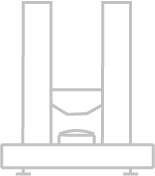
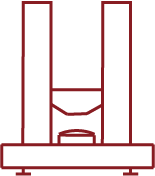
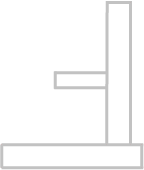
Test cells and batteries shall be rigidly attached to the testing machine using a rigid mount, which supports all mounting surfaces of each test battery pack.
Each cell and battery shall be subjected to a half-sine shock pulse with a maximum acceleration of 150gn and a pulse duration of 6ms. Each cell or battery shall be subjected to three shocks in the positive direction of each of three mutually perpendicular mounting orientations of the cell or battery, followed by three shocks in the negative direction, for a total of 18 shocks.
However, large cells and large batteries shall be subjected to a half-sine shock pulse with a maximum acceleration of 50gn and a pulse duration of 11ms. Each cell or battery shall be subjected to three shocks in the positive direction of each of three mutually perpendicular mounting orientations, followed by three shocks in the negative direction, for a total of 18 shocks.
The maximum acceleration of the half-sine shock pulse that each cell must withstand depends on the mass of the battery pack. The pulse duration is 6ms for small battery packs and 11ms for large battery packs. The following formula is used to calculate the appropriate minimum maximum acceleration.

The relationship between the minimum maximum acceleration and mass is shown in Figure 1 for small battery packs and Figure 2 for large battery packs.

Figure 1: Small battery packs (under 12 kg)
Relationship between maximum acceleration and mass

Figure 2: Large battery packs (12 kg and above)
Relationship between maximum acceleration and mass
Requirements
A cell or battery meets this requirement if there is no loss of mass, no leakage, no venting, no disintegration, no rupture, and no combustion, and if the open-circuit voltage of each test cell or battery after the test is not less than 90% of its voltage before the test. The voltage requirement does not apply to test cells or batteries in a fully discharged state.
18650 and 21700 Batteries
18650 Batteries Characteristics
Dimensions: 18mm diameter, 65mm height
Capacity: 2000–3500mAh
Nominal Voltage: 3.6–3.7V
Weight: Approx. 45–50g
Energy Density: Approx. 240–260Wh/kg
Applications: Power tools, small energy storage devices, emergency power supplies, some low-speed electric vehicles, and backup battery packs
21700 Batteries Characteristics
Dimensions: 21mm diameter, 70mm height
Capacity: 4000–5000mAh
Nominal Voltage: 3.6–3.7V
Weight: Approx. 65–70g
Energy Density: Approx. 250–300Wh/kg
Applications: Electric vehicle traction battery packs, large energy storage systems, high-power power tools

CME Customized Fixtures

Recommended Equipment
KRD11-15 Pneumatic Vertical Shock Test System
The pneumatic vertical shock test system is a testing device used to simulate shock environments during transport, handling, or operation. It is widely used for shock reliability testing of lithium batteries, battery packs, electronic products, automotive components, and more. The system uses a pneumatic drive to achieve high repeatability and stable shock pulses, meeting the requirements of various standard shock tests.

Key Technical Specifications
Rated Load: 15kg
Table Size: 200×200mm (customizable)
Peak Acceleration: 5–2000g (half-sine)
Pulse Duration: 0.5–40ms (half-sine)
Key Parameter: 150g @ 6ms
Equipment Features
Pneumatic drive mechanism, simple structure, high reliability
Capable of achieving long pulse widths and low overload shock tests
Equipped with a shock control and measurement system for single or continuous shock tests
Integrated braking safety mechanism ensures test safety
Built-in high-performance vibration isolation mounting, no special foundation required, easy and safe installation
18650 Batteries Test: 150g @ 6ms


21700 Batteries Test: 150g @ 6ms